What Nordic Slow Living Actually Looks Like at My Cottage
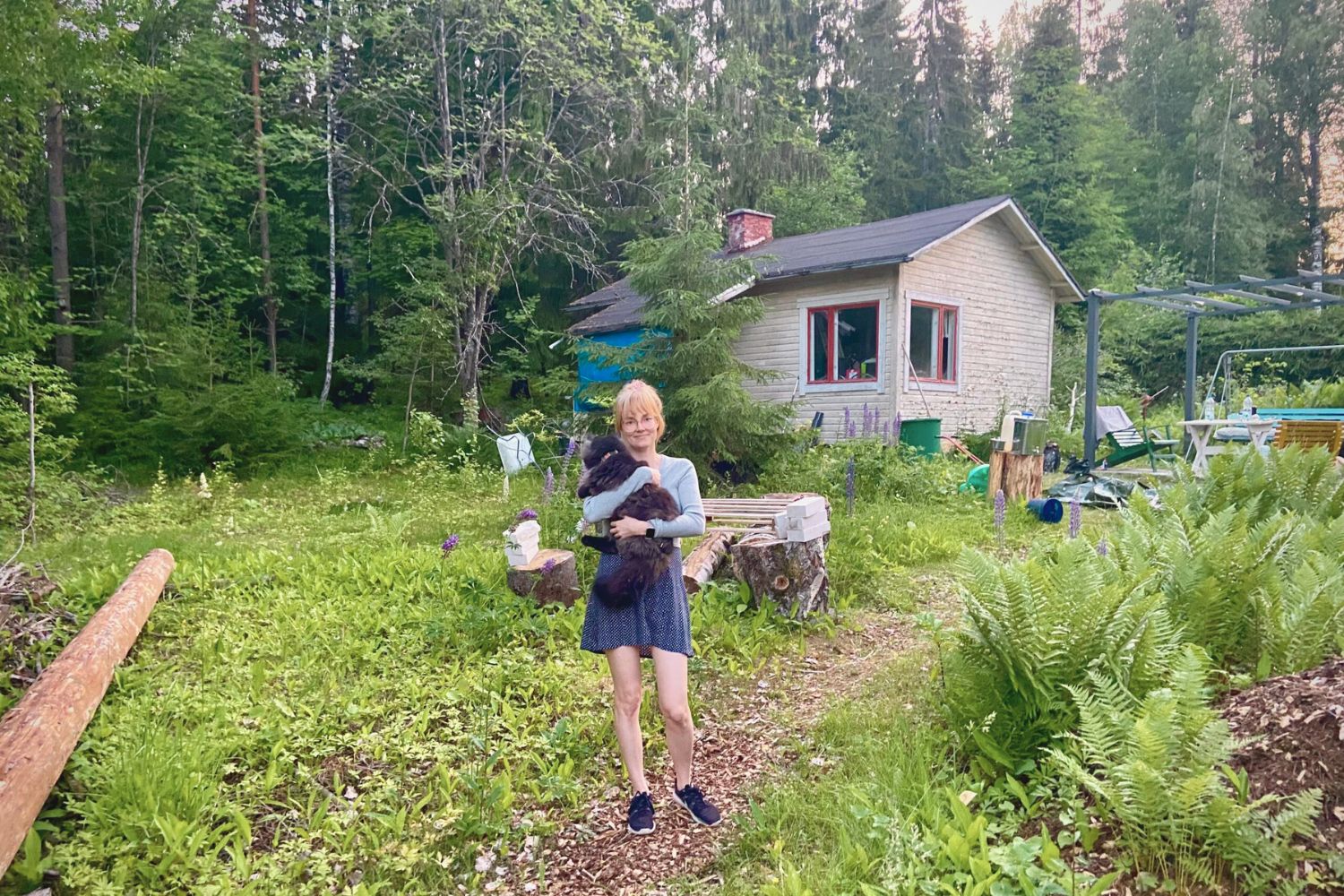
There’s a short stretch of path between the road and the cottage — maybe eighty steps, lined on one side by overgrown lilac and on the other by the kind of tall grass that soaks your shoes if you walk it too early in the morning. I’ve come to think of it as a kind of threshold, though it took me a while to notice that. Something happens on that path, every single time I walk it, that doesn’t happen anywhere else in my week.
By the time I reach the cottage door, I’ve usually stopped thinking about whatever I was thinking about in the car. My shoulders have dropped a little. Teemu, one of my two cats, almost always insists on being carried the last stretch — he’s decided, somewhat illogically, that the path is for walking and the arrival is for being held — and there’s something about that small, specific ritual that has come to mean more to me than most of what I do to “relax” on purpose. It isn’t dramatic. It’s just eighty steps and a cat who doesn’t want to walk anymore. But it’s the clearest picture I have of what slow living actually means to me, day to day, far more than any curated interior ever could.
I wanted this post to start there, on the path, rather than with a definition — because I think Nordic slow living gets misunderstood fairly often, usually in one of two directions. Either it becomes a strict lifestyle philosophy with rules attached, or it flattens into an aesthetic: butter-yellow light, linen throws, a candle lit at the right moment for a photo. Both miss the actual point, which is smaller, more repeatable, and considerably less photogenic than either version suggests.
What I Actually Mean by “Cozy”
I use the word cozy a lot, so I want to be precise about what I mean by it, because I think the word has been stretched thin by overuse until it barely means anything specific anymore.
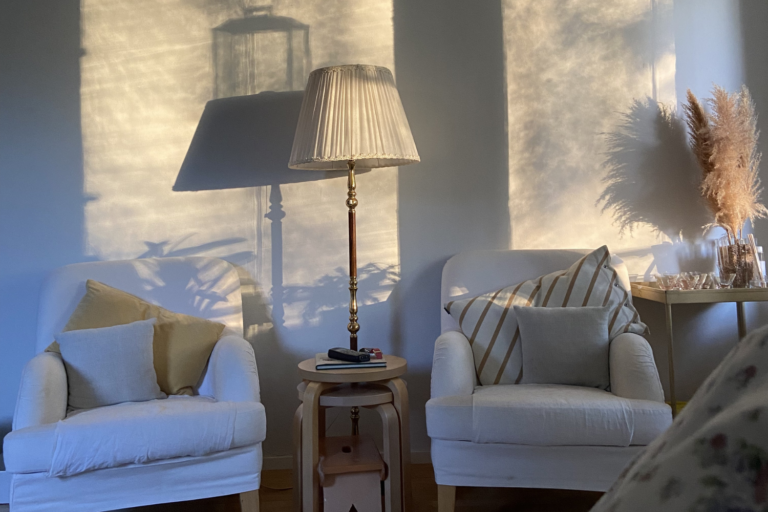
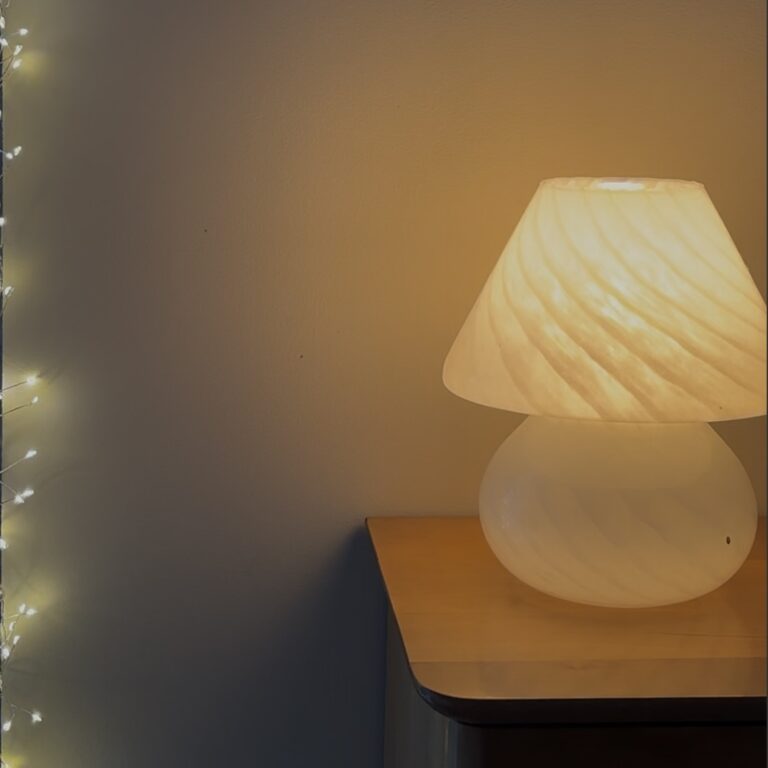
For me, cozy isn’t a color palette, although I’ll admit I’m drawn to a fairly consistent one — warm beige, soft butter-yellow light in the late afternoon, natural wood that’s been allowed to show its grain rather than being painted over. But those are symptoms of something, not the thing itself. The actual quality I’m chasing is closer to ease. A cozy space, to me, is one that doesn’t ask anything of you the moment you walk into it. No performance, no maintenance anxiety, nothing that needs to be tidied before you’re allowed to sit down.
At the cottage, this shows up in small, unglamorous ways. A worn wool blanket draped over the back of a chair, left there because it’s actually used, not staged. A reading corner that exists because a chair happened to end up near the best window, not because I planned a “reading nook.” A kitchen where the tea things live somewhere easy to reach, because slow mornings only stay slow if nothing requires effort to locate. Hygge, in the way I’ve come to understand and practice it, isn’t a look. It’s the accumulated effect of a hundred small decisions that all point toward the same thing: making it easier, not harder, to sit still.
The Pull of the Cabin
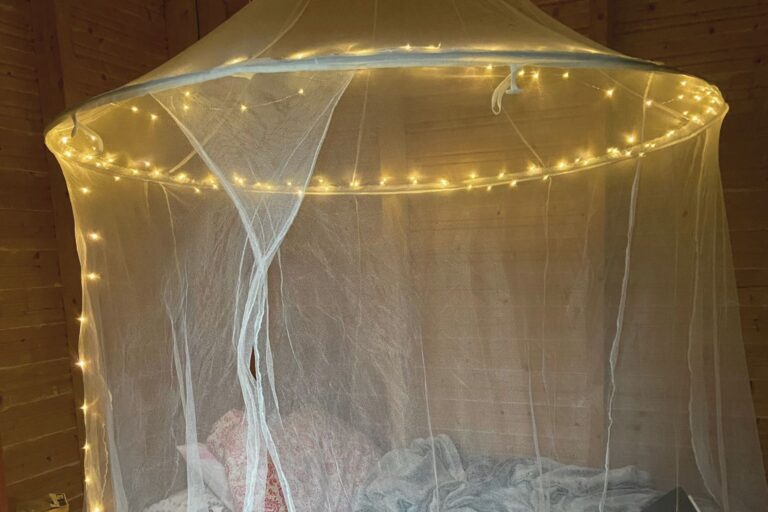
I think almost everyone carries some version of the same daydream — a small cabin somewhere quiet, away from whatever their version of noise is. For me, that daydream stopped being abstract the moment I actually had a cottage to point it at, rough and unfinished as it currently is.
What draws me to cabin and cottage living specifically, rather than just “nature” in a general sense, is the size of it. A small space forces a kind of honesty that a larger house doesn’t. There’s no room for things you don’t actually use, no closet deep enough to hide indecision in. Everything visible has to earn its place, which sounds restrictive until you experience how calming that restriction actually is. Nordic design has understood this for a long time — the minimalism isn’t about owning less as a virtue in itself, it’s about the relief of not being surrounded by things that quietly ask for your attention.
Light wood, pale walls, a handful of well-chosen textiles instead of many mediocre ones — these choices aren’t decorative for their own sake. They’re functional. A small space handled this way feels larger and calmer than the same square footage crammed with more. I notice this most acutely at the cottage in the evenings, when the low sun comes in sideways through windows that haven’t been fully renovated yet, and even in its unfinished state, the room holds a kind of stillness that has nothing to do with how “done” it looks.
Where Nature Actually Fits In
I don’t think of nature as a backdrop to this way of living. It’s closer to the engine of it.
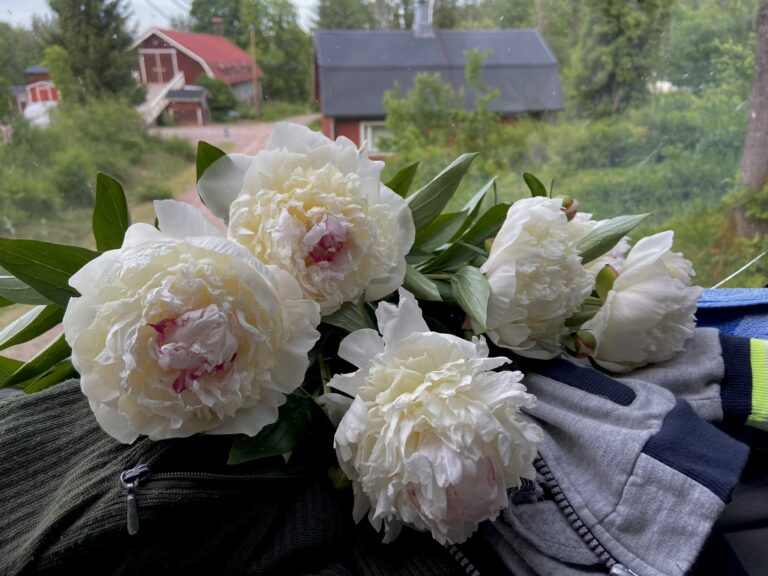
The garden at the cottage is, at the moment, still mostly a question mark — overgrown in places, cleared in others, very much a work in progress rather than anything resembling the finished herb beds and seasonal flower borders I picture when I close my eyes. But even in this rough state, it’s already teaching me something about the rhythm this whole way of living depends on. You can’t rush a garden. You can only show up, do the next small thing it needs, and let the season do the rest on its own schedule.
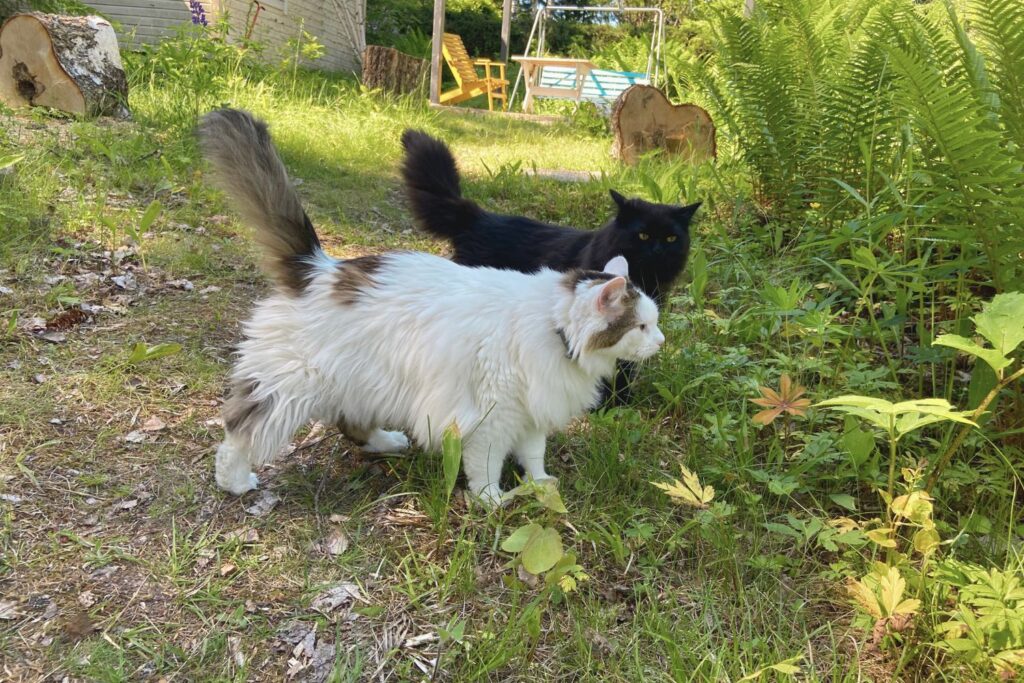
I’m especially drawn to the idea of a garden that works for everyone who actually lives here — including the cats. Both Iivari, who goes by Avery in most of what I share, and Teemu spend a fair amount of time outside when we’re at the cottage, and I’ve started thinking about the garden with that in mind: safe plants, a shaded spot that isn’t just pretty but actually gets used by whoever wants to lie in it, herbs within easy reach of the kitchen door rather than arranged for how they photograph. Function first. The charm tends to follow on its own once something is actually used the way it’s meant to be.
Seasonal living matters to me for similar reasons. There’s comfort in not fighting the calendar — in letting summer be about long light and outdoor meals, and winter be about candles and staying indoors without guilt. Nordic Quiet, as a name, was never meant to describe a single aesthetic moment. It’s meant to describe a rhythm that changes with the seasons and doesn’t apologize for that.
A Simple, Honest Home
If I had to describe what I’m actually building here, at Nordic Quiet, in the plainest terms I can manage, it would be this: a record of a calm, deliberately simple home, built slowly, mostly by one person, alongside two cats who have very clear opinions about how the process should go.
I’m not interested in presenting a finished version of any of this before it’s true. The cottage is still rough in places. The garden is still more question than answer. Even my apartment in the city, where I spend most of my week, is an ongoing, imperfect practice of the same principles rather than a completed showcase. What I can offer honestly is the process — the actual, unfiltered version of trying to live a little more slowly, a little more intentionally, in a life that doesn’t always make that easy.
That’s what this space is for. Not a fantasy of Nordic living, fully assembled and ready to admire, but the real, in-progress version of it — eighty steps down a path, a cat who’d rather be carried than walk, and the quiet that shows up anyway, a little more each time.
Nordic Quiet is a slow living journal following a Finnish cottage renovation, one unhurried season at a time.