The Slow Living Reset: How to Quiet Your Life the Nordic Way
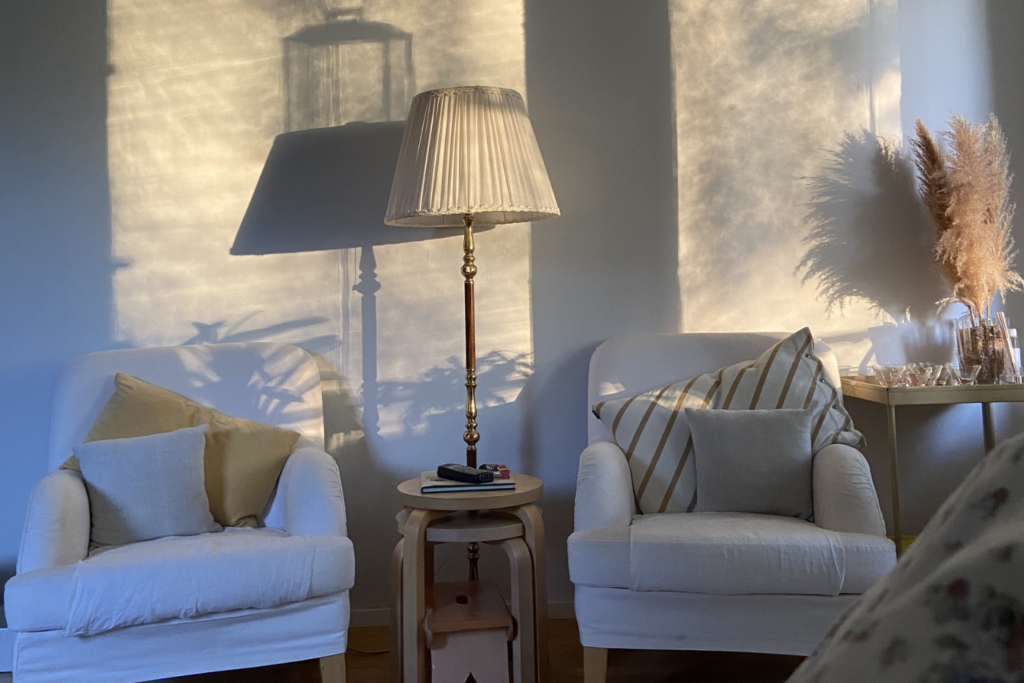
There is a particular kind of tiredness that has nothing to do with sleep. You can rest for eight hours, wake up on a Saturday with nowhere to be, and still feel it sitting behind your eyes — a low hum of unfinished tabs, unread messages, half-formed obligations. It doesn’t announce itself loudly. It just accumulates, the way dust collects on a shelf you stopped noticing months ago. And then one ordinary Tuesday, you find yourself standing in your kitchen, kettle in hand, unable to remember the last time your mind was actually quiet.
I know this tiredness well. It is, in some ways, the reason Nordic Quiet exists at all.
The Noise We Stopped Hearing
We don’t usually think of our lives as loud. Loud is a concept we reserve for traffic, for construction sites, for crowded rooms. But there is a quieter, more insidious noise that fills modern life — the noise of constant low-grade decision-making. What to answer first. What to buy. What to watch, read, respond to, optimize, improve. Each decision is small enough to seem harmless. Together, they form a kind of static that never fully switches off.
Finnish culture has a word that doesn’t translate cleanly into English: sisu. People usually describe it as grit or quiet resilience, the ability to push through hardship without complaint. But there’s a lesser-known cousin to that idea, something closer to hiljaisuus — stillness, or the capacity to simply be quiet, undisturbed, unhurried. In Finland, this isn’t treated as a luxury or an aesthetic. It is simply how life has been lived for generations, particularly in the countryside, where the rhythm of the seasons dictates far more than any calendar app ever could.
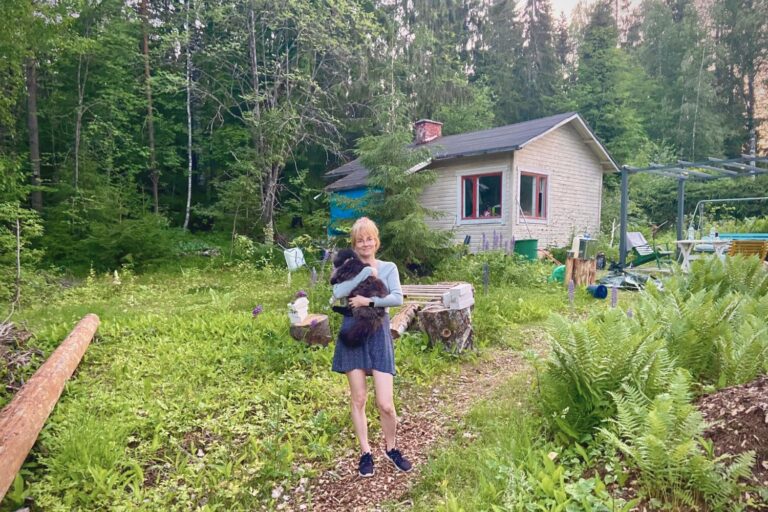
I grew up in the middle of Helsinki, in a neighborhood with more cafés than trees, so stillness was never something I inherited — it was something I had to go looking for. Later, when I started renovating an old cottage far from the city, I began to notice how differently time moves when there is nothing performing urgency at you. No notifications. No feed refreshing itself while you’re not looking. Just weather, light, and the slow accumulation of small, physical tasks — chopping wood, airing out a room, waiting for paint to dry. At first, the silence felt uncomfortable, almost itchy, the way a room feels too quiet after you turn off a television you’d forgotten was on. But discomfort, I’ve learned, is often just unfamiliarity wearing a disguise.
Why Rest Doesn’t Fix This
Here is something that surprises people: burnout is rarely solved by more rest, at least not in the way we usually imagine rest. A weekend off, a bath, an early night — these help, but they treat the symptom, not the source. The deeper issue is usually not a lack of sleep but a lack of space. Space between one demand and the next. Space to hear your own thoughts before someone else’s opinion, headline, or notification fills that space for you.
This is where most attempts at “self-care” quietly fail. We try to rest inside the same structure that exhausted us in the first place — scrolling to relax, half-watching something while replying to messages, treating stillness as one more task to complete efficiently. Real quiet asks for something different. It asks you to stop filling every gap, even the small ones. Even the ones that feel productive.
I think of it like a Finnish forest in late autumn. Nothing dramatic is happening. The leaves have already fallen; the snow hasn’t arrived yet. To an outside eye, it might look empty, even a little bleak. But if you stand still long enough, you start to notice how much is actually happening beneath the surface — roots settling, the ground preparing itself, life continuing in a register too slow and too quiet for our usual pace of attention. Nothing about that forest is rushing toward its next season. And yet nothing about it is idle either.
That, to me, is the heart of slow living. Not inactivity. Not disappearing from your responsibilities. Just a return to a pace where you can actually notice your own life while you’re living it.
If this is the kind of quiet you’ve been missing, the Nordic Quiet 7-Day Reset is a simple, structured week built around exactly this — one small shift at a time.
The Cottage as a Teacher
When I first started spending real time at the cottage — before any of the renovation work began, back when it was still cluttered, a little overgrown, more of a question mark than a home — I expected the place to feel unfinished. What surprised me was how finished the stillness already felt, even while the building itself was falling apart around it.
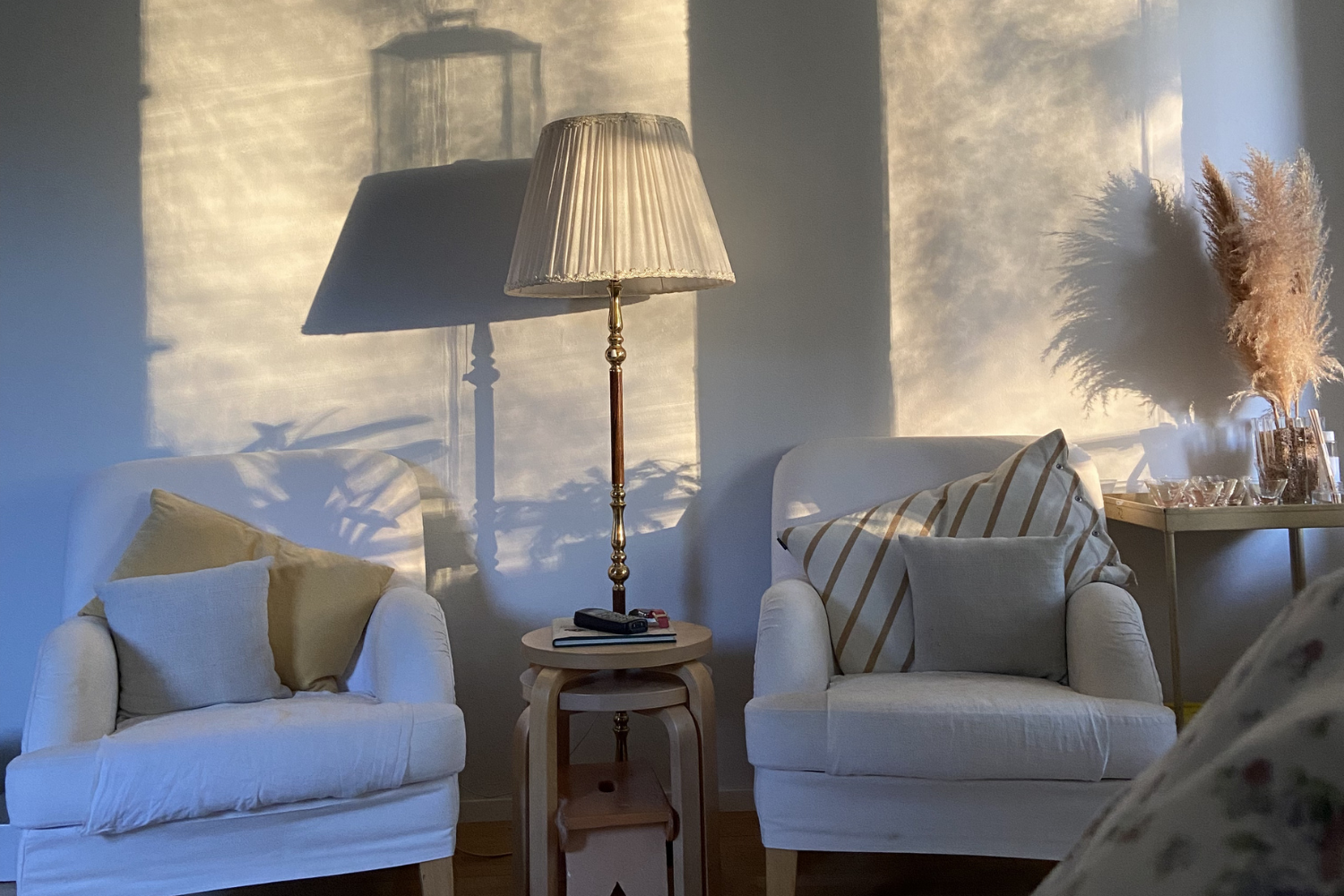
There’s a specific kind of clarity that comes from being somewhere without constant stimulation. You start doing things simply because they are in front of you: sweeping a floor, sorting through a drawer of old tools, watching the light shift across a wall over the course of an afternoon. None of it is remarkable. All of it is calming in a way that’s hard to explain until you’ve experienced it.
I’ve come to think that this is exactly what a “reset” actually means — not a dramatic transformation, not a total life overhaul, but a return to noticing. A week where you deliberately create small pockets of space and protect them, the same way you might protect a seedling from frost. You don’t need a cottage in the Finnish countryside to do this, although admittedly, it doesn’t hurt. You need permission — permission to let some things go unanswered, some tasks go undone, some silence go unfilled.

What Slowing Down Actually Requires
If you’ve tried to slow down before, you may already know that it’s rarely as simple as deciding to relax. Old patterns are sticky. The moment things go quiet, many of us feel a pull to fill the space again — with a screen, a task, a plan for tomorrow. Slowing down, real slowing down, tends to require a bit of structure. Not rigid rules, but gentle boundaries: a specific time of day with no screens, a walk taken without a destination, a single hour reserved for something that produces nothing except a quieter mind.
This is part of why I’ve been drawn to designing this kind of reset for myself, in a fairly deliberate way, rather than waiting for burnout to force the issue. The Finnish countryside has a natural rhythm built into it — long light in summer, deep dark in winter, weather that simply cannot be argued with. Most of us don’t have that built-in rhythm anymore. We have to build it ourselves, on purpose, inside lives that were not designed with quiet in mind.
I don’t think this needs to be complicated. In fact, I’d argue it shouldn’t be. The moment a reset starts to feel like a new set of demanding rules, it stops being restful and starts being one more thing to fail at. What has worked, for me and for the version of this I’m now shaping into something others can use, is much simpler: a handful of small, specific shifts, spread across a short stretch of days, each one asking very little except your attention.
An Honest Note About Timing
I’ll admit something here, because this space has always been meant to be honest rather than aspirational. I’m writing this from the middle of a renovation that is nowhere near finished. There is dust in rooms that should be calm. There are tools where there should be furniture. If you came here expecting a polished, after-photo version of slow living, you’ll find something rougher and more real instead — a cottage still becoming itself, much like most of us are.
I think that’s actually the more useful place to write from. It’s easy to romanticize stillness once a space is already beautiful, once the hard work is behind you. It’s harder, and more honest, to talk about quiet in the middle of mess — to say that the two aren’t opposites, and that you don’t need your surroundings to be finished before you’re allowed to slow down.
A Small Practice, Not a Big Promise
I’ve spent the last while quietly putting together something small and specific: a short, structured way to walk through a reset like this yourself, built around the same principles that shaped this cottage and this way of living — space over speed, attention over accumulation, small deliberate steps rather than one dramatic overhaul. It isn’t complicated, and it was never meant to be. It’s built to be the kind of thing you could start on a Monday and finish still feeling like yourself, only a little quieter.
That guide now exists. The Nordic Quiet 7-Day Reset walks you through one week, one gentle shift at a time — no overhaul, no talking yourself into a whole new life, just space, reclaimed a little at a time.
For now, though, I’d rather leave you with something simpler than a product: an invitation to notice one loud, unnecessary thing in your week and remove it. Just one. Not everything. Not permanently, if you don’t want it to be. Just enough to feel, even briefly, what a little more space actually sounds like.
If that’s something you’d like to explore properly, the full reset guide is here — built for exactly this kind of week, in exactly this kind of life. Until then, I hope this piece has been a small, quiet room of its own.

Nordic Quiet is a slow living journal following a Finnish cottage renovation, one unhurried season at a time.