Cottage Renovation Diary: What I Found Cleaning Out the Cottage
There’s a moment, early on in any renovation, when you open a door you’ve been avoiding and just stand there. Not doing anything. Just looking. For me, that door led to a room I’d been putting off for months — stacked with decades of things nobody had sorted through, smelling faintly of old wood and dust, lit only by whatever daylight made it through a window that hadn’t been washed in years. I remember thinking, quite calmly, I have no idea where to start.
If you’ve ever inherited a space like this — a cottage, a childhood home, a relative’s house full of history you didn’t choose — you know exactly the feeling I mean. It isn’t dramatic. It’s just heavy, in a low, persistent way, the kind of heavy that makes you close the door again and go make tea instead.
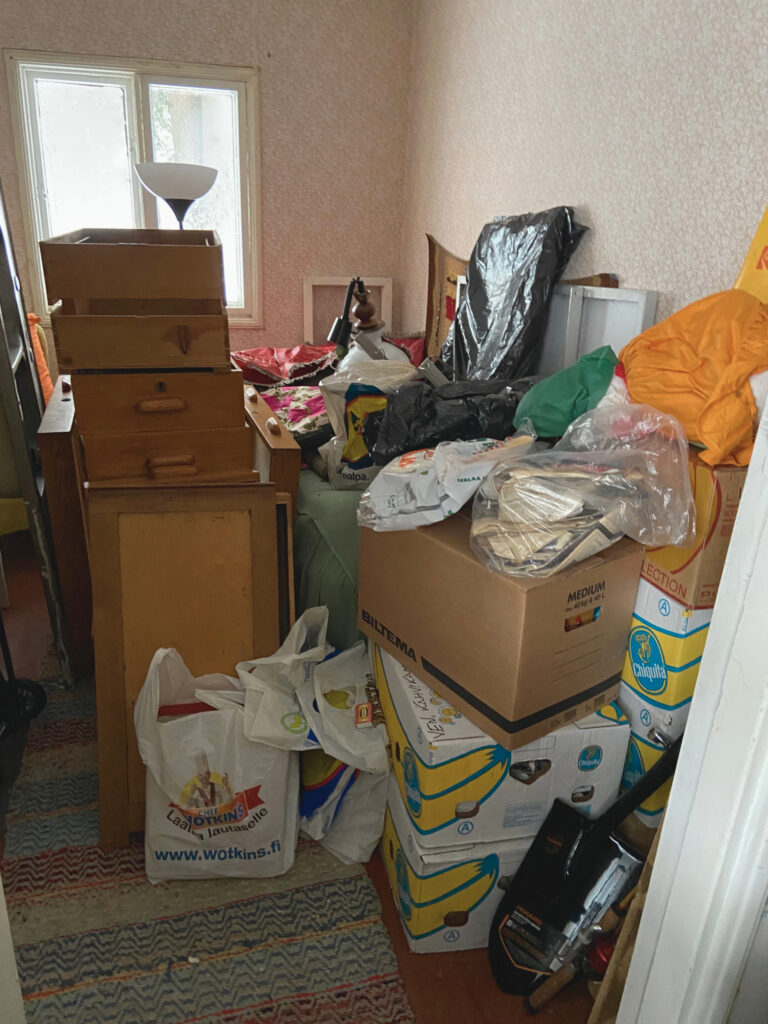
This is the diary of what actually happened when I stopped closing that door.
The Problem Nobody Warns You About
Most renovation content skips straight to the satisfying part — the moodboards, the paint swatches, the “after.” What it rarely shows you is the part that actually determines whether you finish the project at all: the sheer, unglamorous work of clearing a space before you can even begin to imagine what it could become.
I think this is where most renovation dreams quietly die. Not from lack of vision, but from the paralysis of not knowing where to start when a space is full — full of clutter, full of history, full of decisions you’re not ready to make yet. You stand in the doorway, overwhelmed by the size of the task, and the not-knowing becomes its own kind of stuck.
So if that’s where you are right now — staring at a room, a garage, a cottage, unsure which pile to touch first — I want to tell you what worked for me. Not a productivity hack. Just what actually happened, slowly, over a season of Sundays.
Starting With What You Can’t Undo
I didn’t start with the clutter. I started with the chimney.
It sounds like an odd place to begin a renovation, but there was a reason. In Finland, if you have a working fireplace or wood stove, the law requires an annual chimney sweep — a nuohooja — to inspect and clean it, both for safety and to keep your home insurance valid. Mine hadn’t been swept since 2009. That’s not a typo. Fifteen years of soot, buildup, and unknown structural condition, sitting untouched in a house I now intended to actually live in.
There is something clarifying about calling a professional to look at the one thing in your home that could genuinely hurt you if ignored. The chimney sweep arrived, went up onto the roof, came back down covered in soot and utterly unbothered, and delivered the kind of verdict I hadn’t realized I was holding my breath for: the fireplaces passed. They were cleared for use.
I want to be honest about how much that mattered to me, disproportionately, more than almost anything else that season. It wasn’t a beautiful moment. Nobody was filming it for a transformation reel. But it was the first concrete proof that this building — rough, cluttered, half-forgotten — could still safely hold warmth. That felt like permission to keep going.
If you’re standing at the start of your own renovation, wondering where to put your first hour of energy, I’d gently suggest the same thing: start with whatever can’t be undone if you get it wrong. Wiring, structure, chimneys, foundations. Not because it’s the most rewarding place to start — it rarely is — but because everything else you build afterward depends on it being right.
Clearing, One Room at a Time
Once the chimney was sorted, I turned to the thing I’d been avoiding: the clutter itself.
Here is what nobody tells you about clearing out a space that’s accumulated decades of things — it isn’t really about the objects. It’s about the decisions. Every single item asks you a tiny question: keep, give away, throw out, or decide later. Multiply that by a few hundred items in a single room, and you understand very quickly why people avoid starting at all. It isn’t laziness. It’s decision fatigue, disguised as procrastination.
What helped me was refusing to decide everything at once. I gave myself permission to make one pass that was purely physical — move things out of the room, sort them loosely into groups, without forcing a final verdict on each item. The final decisions came later, in a second, calmer pass, once I could actually see the floor and the room stopped feeling like it was closing in.
There’s a particular kind of relief in that first empty floor. Not because the work is done — it very much isn’t — but because the room finally looks like a space with potential again, rather than a problem to be solved. I took photos as I went, not for any strategic reason at first, just instinct, the same instinct that makes you want to remember a before, even when you’re not sure yet what the after will look like.
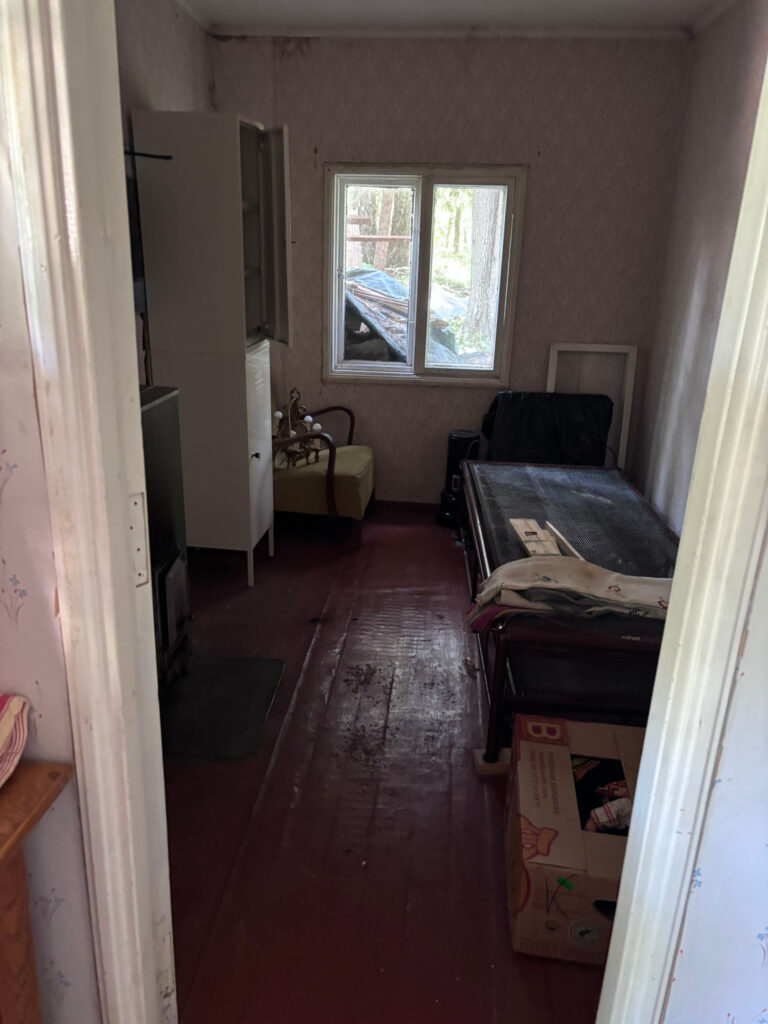
Looking back at those photos now, I’m glad I did. They’re not beautiful. They’re proof — evidence that this space was once genuinely, overwhelmingly full, and that it became less so through nothing more dramatic than showing up, room by room, and doing the unglamorous sorting work.
If you’re staring down your own version of this room, I put together a renovation planner to make the “where do I even start” part easier.
What the Garden Gave Up
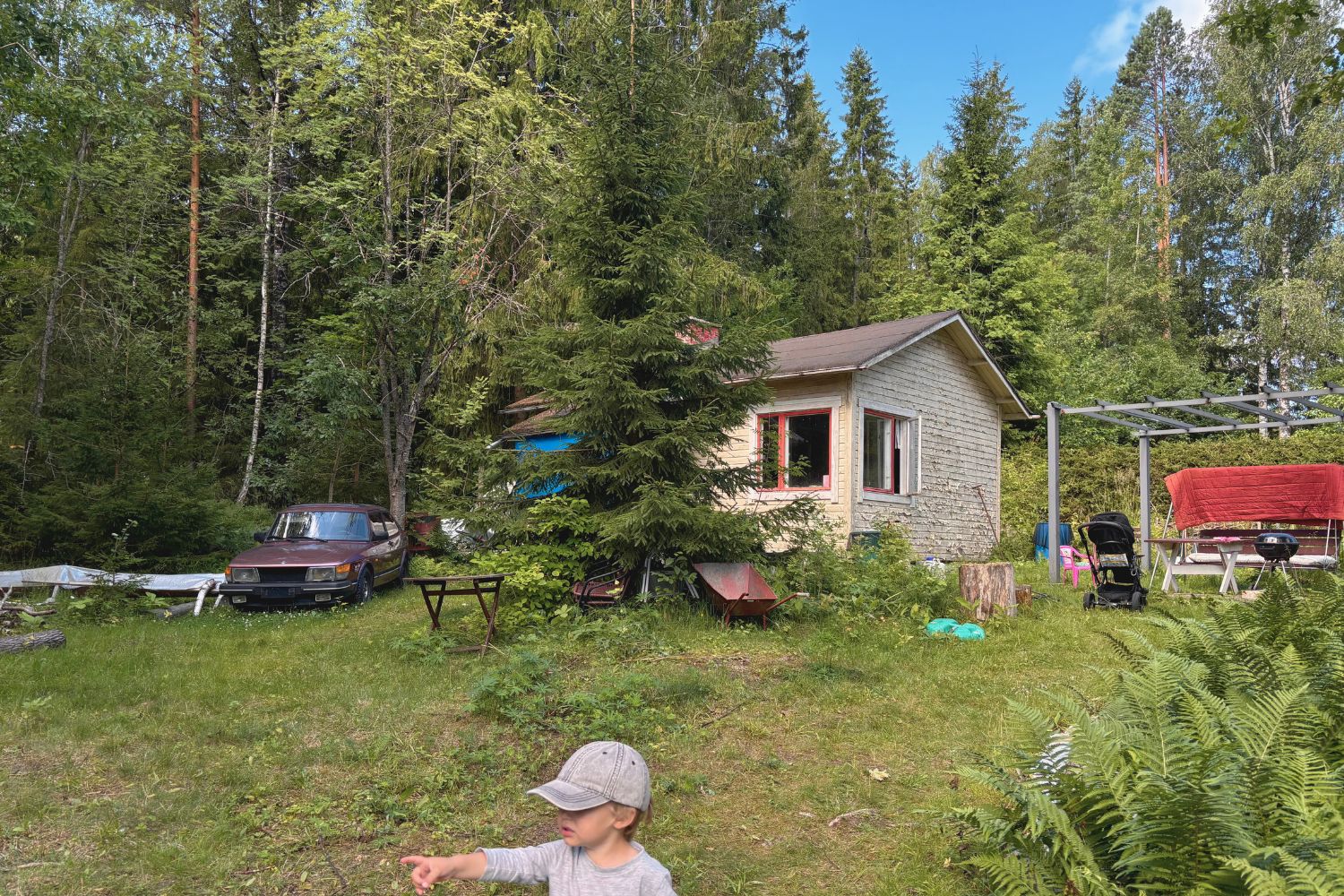
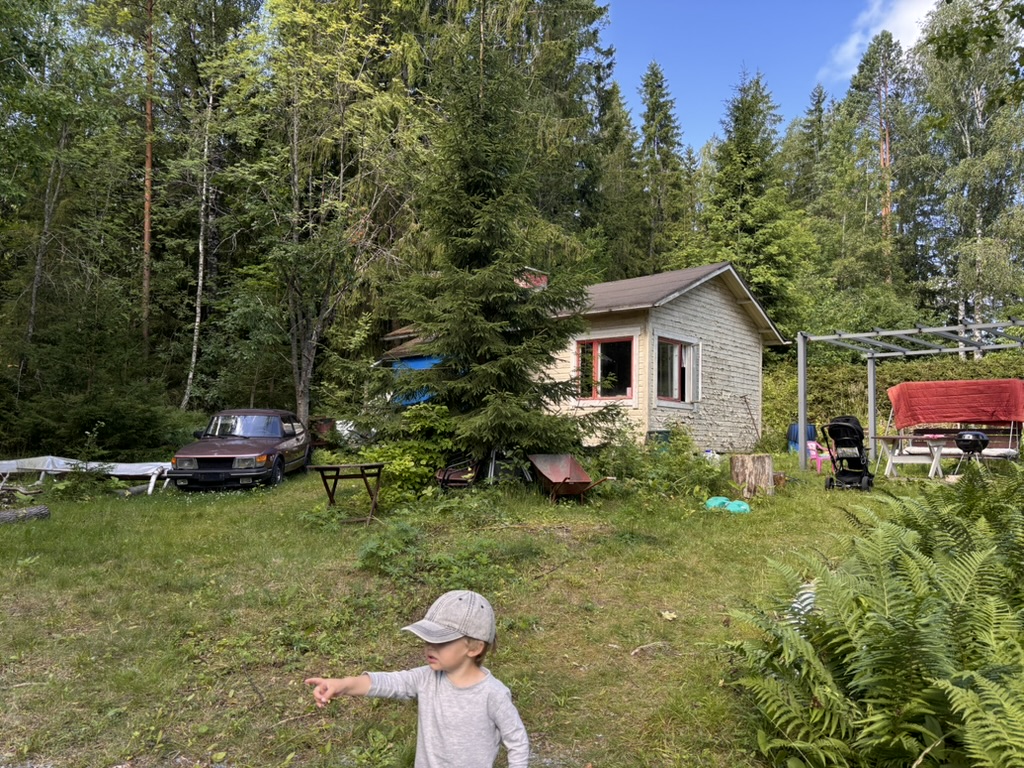
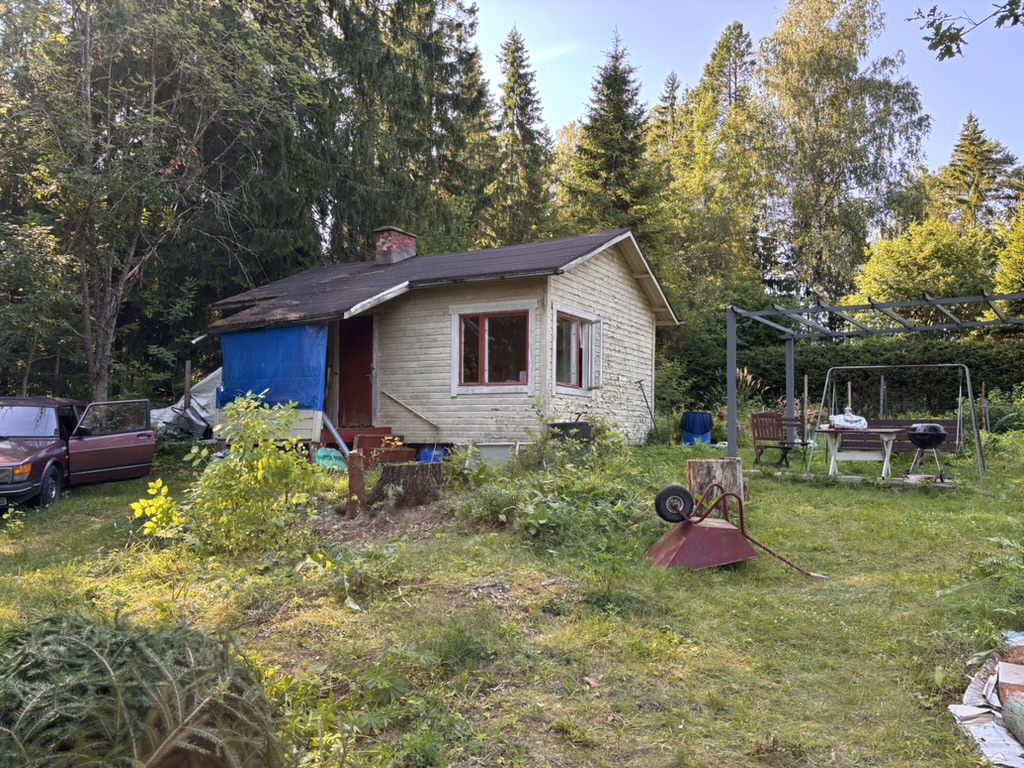
The clearing didn’t stop at the walls. Just outside the front of the cottage stood a small spruce tree that had, over the years, grown close enough to block both light and the view from the main window. It wasn’t a difficult decision, exactly, but it was a symbolic one — the first physical, visible change to the outside of the property since I’d taken it on.
I felled it myself, on one of those long early-summer evenings when the light barely fades. And the difference was immediate in a way that surprised me. The front of the cottage, which had felt slightly hemmed in, slightly forgotten, suddenly had room to breathe. More light reached the window. The whole approach to the house felt different — smaller in the way a room feels smaller when it’s cluttered, and larger once that clutter is gone.
It’s a small thing, one tree. But it was the first before-and-after of this entire renovation, and there’s something worth naming in that: the very first visible progress in a big, overwhelming project is often something quiet and small, not the dramatic transformation you’re picturing. Let the small win count. It’s still a win.
What’s Only Just Beginning
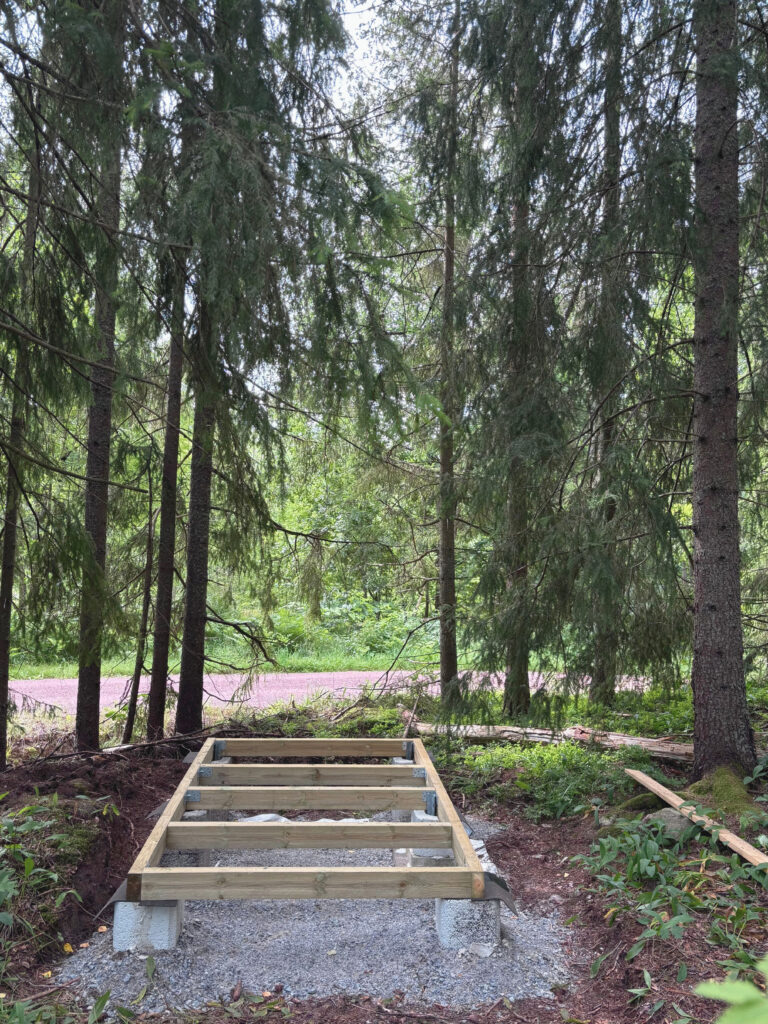
Not everything from this season is finished, and I want to be honest about that too, because I think the honesty is more useful than the polish. Tucked behind the cottage, there’s now a set of foundations for something new — a dry composting toilet, a huussi, which will eventually replace the outdated setup that came with the property. Right now, it’s just concrete and framework, nothing photogenic, nothing close to done. But foundations are still progress, even when they don’t look like much yet.
I’ll admit I spent a fair amount of time looking at other people’s finished dry toilets for inspiration before I started — the kind of small, thoughtfully designed outbuildings that turn a purely practical structure into something that actually belongs in a garden. I won’t be sharing those images here, since they belong to the people who built them, not to me. But if you’re at the beginning of a similar project, it’s worth spending an evening looking around for ideas before you pour a single foundation. It’s much easier to build toward a shape you can picture than to figure it out as you go.
The One Thing I’d Tell You
If you take one thing from this diary entry, let it be this: you don’t need to know what the finished space looks like before you start clearing it. I didn’t. I still don’t, not entirely. What you need is permission to do the unglamorous first pass — the chimney sweep, the sorting, the felled tree, the foundations that aren’t finished yet — without waiting until you feel ready or inspired or capable of seeing the whole picture at once.
The whole picture comes later. It comes from a hundred small, undramatic decisions like the ones I’ve described here, made on ordinary evenings, mostly alone, mostly without an audience. That’s the part nobody puts in the transformation reel. It’s also, I think, the part that actually matters.
If you’re at the very start of your own renovation — standing in your own doorway, unsure where to begin — I’ve put together a simple way to organize exactly this kind of overwhelming beginning: what to check first, what to clear, what to plan for before you touch a single paint swatch. It’s built from precisely this season, the unglamorous one, the one that actually makes everything after it possible.
Nordic Quiet is a slow living journal following a Finnish cottage renovation, one unhurried season at a time.