How to Plan a Cottage Renovation Without Feeling Overwhelmed

Renovating a cottage is exciting right up until the moment it isn’t. You buy the place, or you finally take over the family cottage that’s been quietly waiting for someone to love it properly, and for a while everything is imagination — the finished kitchen, the garden in bloom, the version of the house you can already see clearly in your mind. Then you actually walk through it with fresh eyes, and reality introduces itself. A roof that’s seen better decades. Paint peeling in sheets. Floors that creak in places that make you nervous to think about too closely. Windows that probably deserve restoring rather than replacing, which of course takes three times as long as simply ordering new ones.
I remember standing in the middle of my own cottage fairly early on, notebook in hand, trying to write down everything that needed doing, and watching the list grow faster than I could write. It wasn’t any single problem that overwhelmed me. It was all of them existing in my head at once, with no order, no sense of what mattered first and what could wait a year.
What I’ve learned since then, slowly and mostly through trial and error, is that renovation stress rarely comes from the work itself. It comes from trying to hold too many decisions in your mind simultaneously, with nowhere to put any of them down. A plan doesn’t make the work smaller. It makes it possible to see, which turns out to matter just as much.
Why Cottages Are Different
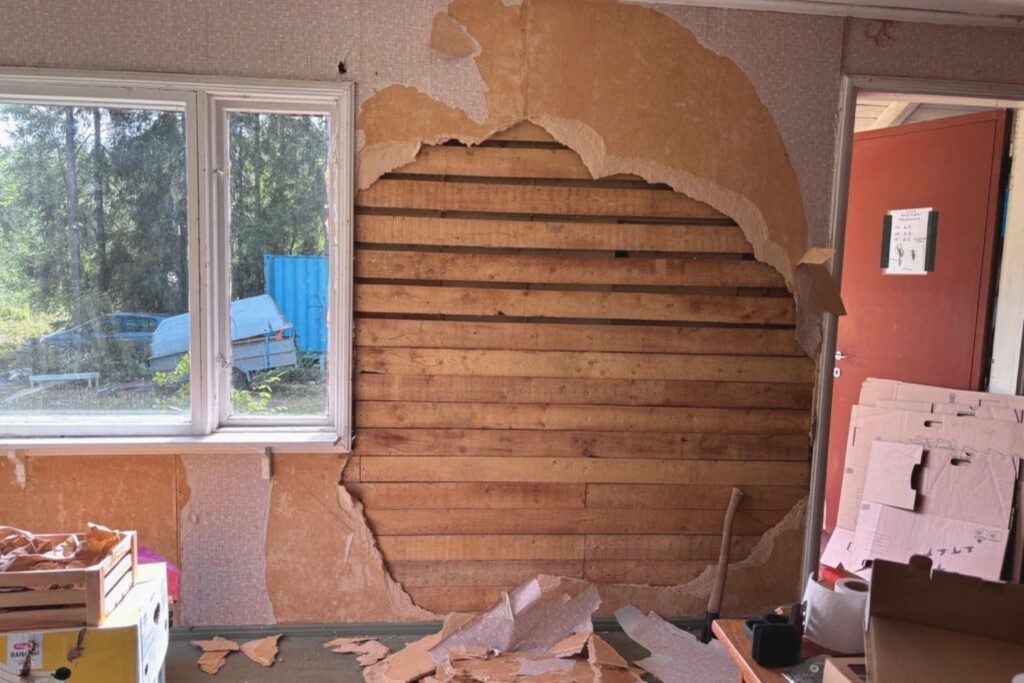
Renovating an old cottage isn’t quite like renovating a modern home, and I think it helps to say that plainly rather than pretend the process is the same. Cottages come with surprises built into their walls — original materials worth preserving if you can, structural quirks nobody warned you about, small mysteries that only reveal themselves once you start pulling things apart. Solve one problem and another quietly introduces itself behind it.
Most of us don’t renovate a cottage in one continuous stretch either. The work happens slowly, across months or years, threaded between ordinary life, work, weather, and whatever else the season demands. It’s easy, in that kind of rhythm, to lose track of where you left off or forget why a particular decision mattered six months ago. I’ve caught myself standing in a half-finished room more than once, genuinely unsure what the plan had been.
The shift that helped me most was fairly simple, even if it took a while to actually believe it: stop thinking of the renovation as one large, continuous project, and start thinking of it as dozens of small ones, loosely connected, each with its own beginning and end.
Starting With the Feeling You Want
Before any budget or shopping list, I’ve come to believe the more useful question is simpler and considerably harder to answer honestly: what are you actually trying to create here? Will this be a full-time home eventually, or a place you retreat to when the rest of life gets too loud? How much of the original character do you want to keep, and how much are you happy to let go of? Which rooms matter most to how the place will actually feel to live in, rather than which ones simply need the most obvious repair?
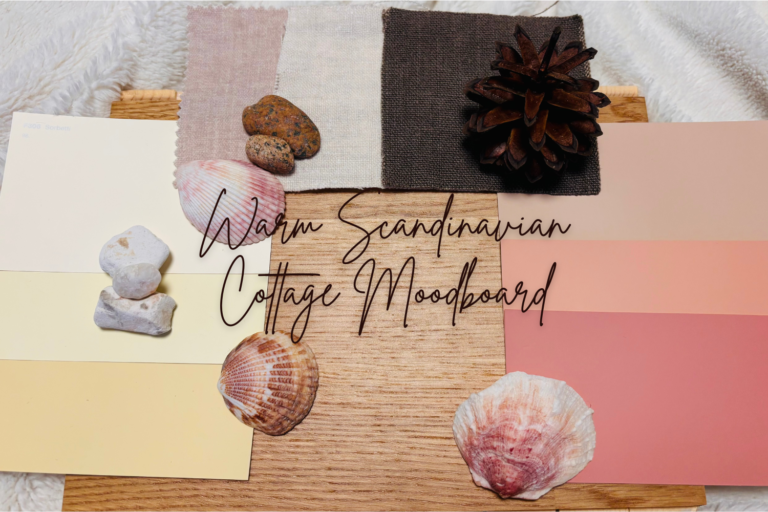
I found a moodboard useful here, not as a design exercise so much as a way of staying honest with myself about what I actually wanted, rather than what looked impressive or trendy in the moment. When every decision — a paint color, a fabric, a fixture — gets measured against the same underlying feeling, it becomes much harder to make an expensive impulse choice that doesn’t actually belong in the place you’re building. If you’re at this stage yourself, this is less about choosing tile samples and more about the feeling you’re building toward — which is exactly why I made a free moodboard template early on, more about mood and rhythm than materials. It won’t tell you which floor to choose, but it might help you remember why you’re doing any of this in the first place.

Making the Renovation Smaller
Looking at an entire cottage renovation at once is exhausting in a way that’s hard to explain until you’ve tried it. Roof, foundation, kitchen, bathroom, every bedroom, the garden, storage, all the invisible utilities running through the walls — held together in your head, it’s less a project than a low hum of anxiety.
What actually helped was dividing all of it into separate, smaller categories, and then breaking each of those into individual, almost absurdly specific tasks. Not “renovate kitchen,” which tells you nothing about what to do on a Tuesday evening with an hour free, but something closer to measuring the cabinets, comparing two flooring samples side by side, choosing a single paint color and living with it on the wall for a week before committing. Small, checkable tasks create a kind of momentum that a single enormous goal never quite manages to. You can feel yourself making progress, which turns out to matter enormously when a project stretches across seasons rather than weeks.
Money, Honestly
I’ll admit budgeting was the part I resisted longest, mostly because I suspected — correctly, as it turned out — that the real numbers would be higher than the ones I’d allowed myself to imagine. Prices shift. Old cottages hide expensive surprises behind seemingly simple repairs. Small purchases, the kind that don’t feel significant individually, add up faster than seems reasonable.
What eventually helped wasn’t a stricter budget so much as a more honest one, broken into categories I could actually track — materials, paint, flooring, furniture, appliances, lighting, whatever the garden needed, any professional labor I couldn’t do myself, and a contingency fund I initially resented setting aside and have since been grateful for more than once. A budget, I’ve come to think, isn’t really about limiting what you can dream up for the place. It’s about removing the specific, gnawing stress of not knowing whether you can actually afford the dream you’re building toward.
Letting the Seasons Set the Pace
Cottage renovations rarely move in a straight line, and Finnish weather makes sure of that more than most. Outdoor work waits for the right season whether you’re ready or not. Deliveries take longer than promised. Life, unhelpfully, keeps happening in the middle of it all.
Rather than fighting this, I found it easier to let the seasons set the actual shape of the plan. Spring for clearing the property and inspecting whatever the winter revealed. Summer for the exterior work, the parts that need dry weather and long light to get done properly. Autumn for whatever needs to happen indoors before the cold arrives — painting, flooring, the furniture that finally gets to go where you’d imagined it. Winter for the quieter work: planning, budgeting, ordering what next season will need, deciding on the details from somewhere warm. This rhythm feels considerably more sustainable than any deadline that pretends the whole thing can simply be finished by a date on a calendar.
Keeping It Somewhere You Can Actually Find It
One of the quieter sources of renovation stress, the kind that doesn’t announce itself the way a leaking roof does, is simply not knowing where anything is. Measurements scattered across your phone. Receipts in a drawer you mean to sort eventually. Paint colors written on a sticky note that’s since gone missing. A materials list buried somewhere in your email, from three months ago, that you’re now trying to reconstruct from memory.
Keeping this all in one place changes the experience of the whole project more than it sounds like it would. When you know exactly what you’ve bought, what you’ve spent, and what’s genuinely still left to do, decisions get easier, and the renovation starts to feel less like a thing happening to you and more like something you’re actually steering.
Progress, Not Perfection
Something I keep having to relearn: many of the most beautiful cottages are never really finished, and that unfinished quality is often exactly what gives them their charm rather than diminishing it. Waiting for perfection before allowing yourself to feel satisfied is a fairly reliable way to feel perpetually behind on a project that, by its nature, doesn’t have a clean finish line.
I’ve tried, with mixed success, to celebrate the completed room instead of only noticing the four that still need work. The repaired window. The wall that’s finally the right color after three attempts. The garden bed that’s actually blooming, however modestly, after a season of mostly dirt and good intentions. A cottage evolves slowly, on its own timeline, and I’ve come to think the process deserves roughly the same appreciation as the eventual result — maybe more, since you spend so much longer inside it.
A System, If You Want One
If any of this resonates — the scattered notes, the mental load of holding an entire renovation in your head, the quiet exhaustion of not knowing what to tackle next — I eventually built myself a proper system for it, and later turned it into something others could use too. The Cottage Renovation Planner is a Google Sheets template built around exactly the categories I’ve described here: tasks, budget, seasonal planning, shopping lists, and a way to actually see progress rather than just feel behind. Whether you’re restoring a tiny countryside cabin or working through a much larger project over several years, having everywhere to put things down tends to make the whole process feel calmer than it otherwise would.
A cottage renovation doesn’t have to be rushed, and in my experience, it rarely rewards you for trying to rush it anyway. The most beautiful ones are usually built slowly — one room, one decision, one thoughtful Tuesday evening at a time. Starting with a clear sense of what you actually want, breaking the work into pieces small enough to hold, budgeting honestly, and letting the seasons set the pace won’t make the roof fix itself. But it does make the whole process something you can genuinely enjoy living through, rather than something you’re simply trying to survive until it’s over. Slow living, after all, was never only about the finished cottage. It was always at least as much about the process of creating it.
Nordic Quiet is a slow living journal following a Finnish cottage renovation, one unhurried season at a time.